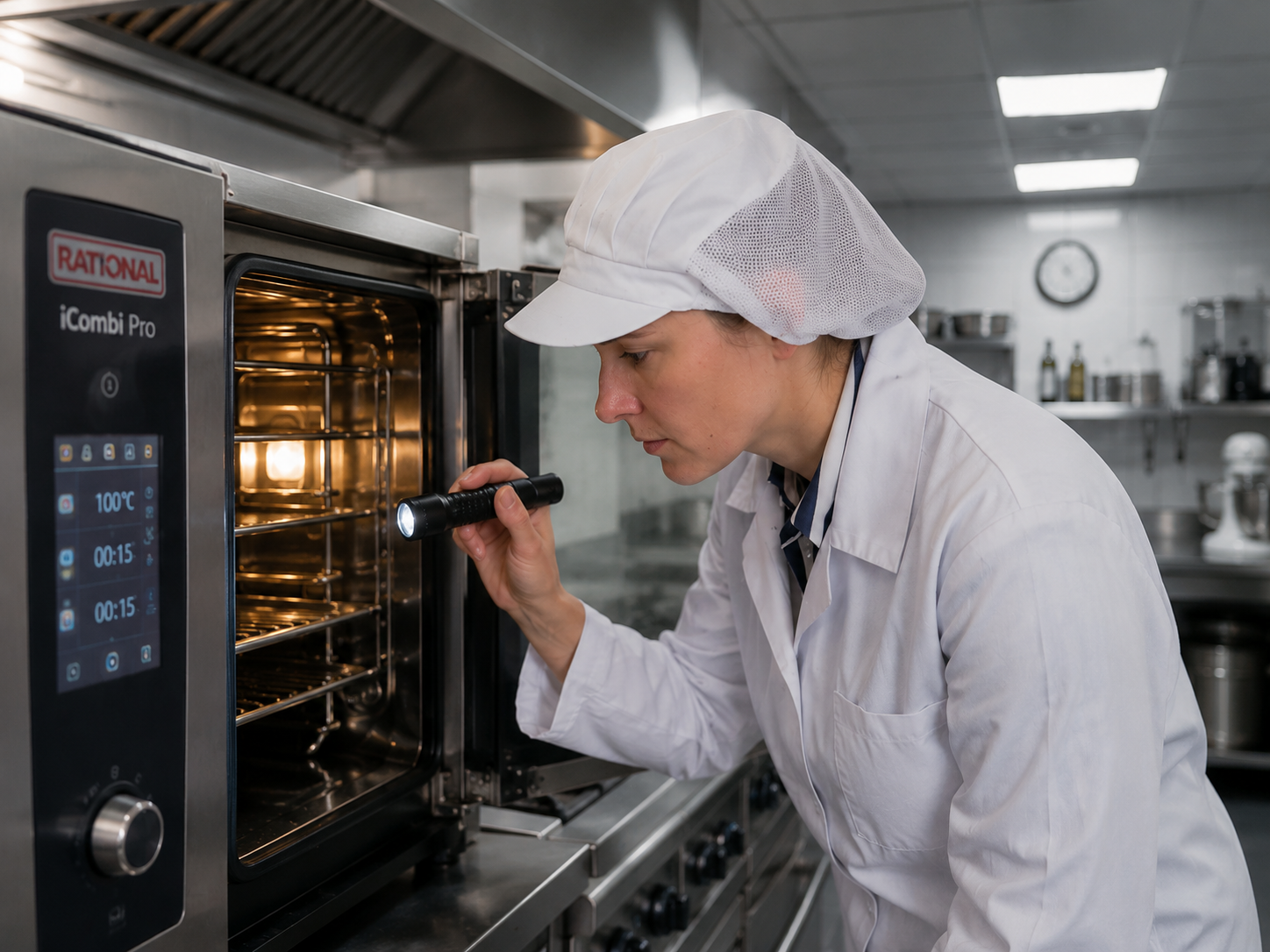
Opening a new restaurant is the ideal time to build food safety into the business—not bolt it on when an inspection is already due. Your first Food Hygiene Rating is based on the standards found when the local authority visits, so the systems you establish before opening need to work during a busy service, not only on paper.
Whether you are opening a restaurant, café, takeaway, bakery or production kitchen, the objective is the same: make safe practice the normal way of working from day one. Olga Wylde helps new food businesses translate legal requirements and food safety principles into clear routines that owners, managers and staff can actually follow.
Your first Food Hygiene Rating starts before the first service
A last-minute deep clean is not a preparation plan. The Food Hygiene Rating Scheme looks at three areas: how hygienically food is handled, the physical condition of the premises, and how food safety is managed. To achieve the top rating of 5, the official guidance says a business must do well in all three.
That means a beautiful new kitchen can still be marked down if temperature controls are unclear, allergen information is unreliable, staff cannot explain procedures, or the food safety management system does not match the menu.
Register the food business at the right time
In England, Wales and Northern Ireland, a food business must register with its local authority at least 28 days before trading. Registration applies to businesses that sell, cook, store, handle, prepare or distribute food, including businesses operating from homes, mobile units, temporary premises or online.
If you operate from more than one site, each location normally needs to be registered with the authority responsible for that area. Rules and processes differ in Scotland, so use the relevant Scottish guidance if that is where you trade.
Registration is an essential legal step, but it does not create your operating procedures for you. Use the weeks before opening to test the menu, map food flows and build controls around the real risks in your kitchen.
Put a suitable food safety management system in place
Your food safety management system should be based on HACCP principles and proportionate to the operation. Safer Food, Better Business (SFBB) may suit many small catering businesses; a complex or manufacturing operation may require a more detailed HACCP system.
The crucial point is suitability. A generic folder downloaded for another type of business will not help if it ignores your own ingredients, preparation methods, equipment, customers and staffing. Document what your team genuinely does, decide who is responsible, and state what must happen when a check fails.
The essential policies and controls to set up
1. Approved suppliers, deliveries and traceability
Decide who may order and receive food. Record supplier details and set acceptance checks for temperature, packaging, date coding, allergen information and signs of contamination or pests. Keep enough traceability information to identify where food came from and where it went where applicable.
2. Temperature control
Define safe methods for chilled and frozen storage, cooking, cooling, reheating and hot holding that match the foods you prepare. Staff should know what to measure, how to use and check probes, where to record results and what corrective action to take.
3. Cross-contamination controls
Map the movement of raw and ready-to-eat food through storage, preparation, cooking and service. Consider equipment, sinks, cloths, utensils, hands, packaging and delivery areas—not only chopping-board colours. The system must work when the kitchen is busiest.
4. Cleaning and disinfection
Create a schedule that says what is cleaned, how, with which product, at what dilution and contact time, how often, and by whom. Include difficult areas such as seals, handles, probes, slicers, ice machines, extraction points and underneath movable equipment.
5. Allergen management
Build allergen controls around recipes and supplier information. Decide how recipe changes are authorised, how staff access current allergen data, and how customer questions are handled without guessing. If you produce prepacked for direct sale (PPDS) food, check whether the specific ingredient and allergen-labelling requirements commonly called Natasha’s Law apply.
6. Staff training, personal hygiene and fitness to work
Training should reflect each person’s role and be reinforced with supervision. Staff need to understand handwashing, protective clothing, illness reporting, contamination risks, allergens and the procedures relevant to their work. Record training, but also confirm that the knowledge appears in day-to-day practice.
7. Pest control and waste
Set routines for checking deliveries, storage areas, external doors, waste spaces and likely harbourage points. Record signs, sightings and corrective action. A blank pest log is ambiguous; a meaningful record shows that checks take place even when no activity is found. Read our guide to pest-control records for food safety inspections.
8. Daily opening, closing and management checks
Choose a short set of checks that confirms the business is ready to trade safely. Include the items that matter to your operation, such as refrigeration, hot water, handwashing supplies, cleaning, date coding, allergen information, pest evidence and staff fitness. Record problems and the action taken, not just a row of ticks.
9. Maintenance and the condition of the premises
Before opening, check that surfaces are cleanable and in good repair, ventilation and lighting are suitable, equipment is serviceable, handwash facilities are usable, and the layout supports safe separation. Keep a defect list with priorities and completion dates.
10. Incidents, complaints and product withdrawal
Decide how the business will respond to an allergen incident, suspected food poisoning, refrigeration failure, water interruption, pest activity or supplier recall. Staff should know whom to contact and when to stop service or isolate food.
What will an EHO look for at a new restaurant?
The officer will observe the operation, inspect the premises, review records and speak to staff. They may ask how you control a high-risk process, how allergen information is kept current, what happens when a fridge is too warm, or how managers verify that procedures are followed.
The best evidence is consistency: the written system matches the kitchen, staff give compatible answers, records are current and corrective actions make sense. Do not backfill records. A shorter genuine history is more credible than paperwork completed retrospectively.
Common first-inspection mistakes
- Using a generic food safety folder that does not reflect the menu or operation.
- Concentrating on visible cleaning while overlooking food handling and management systems.
- Leaving allergen controls until after recipes and menus are finalised.
- Recording checks without documenting failures or corrective action.
- Giving responsibilities to “the manager” without naming who covers each shift.
- Training staff once but not checking whether procedures are followed.
- Waiting for inspection notice before becoming inspection-ready.
These gaps can be corrected more easily before opening than during a busy trading period.
How to give your new restaurant the strongest start
- Review the menu and process flow. Identify higher-risk foods and stages.
- Choose and tailor the food safety system. Make every section relevant.
- Test the controls. Run trial deliveries, preparation, cooling, cleaning and closing checks.
- Train the whole team. Include temporary, front-of-house and supervisory staff where their roles affect food safety.
- Carry out a pre-opening mock inspection. View the premises, paperwork and staff knowledge as one system.
- Prioritise the findings. Correct immediate safety issues first, then management and maintenance gaps.
- Review the first weeks closely. Early records will show where a procedure is unclear or unrealistic.
How Olga Wylde can help before you open
Olga combines more than 10 years of hands-on hospitality experience with 8 years working specifically in food health and safety. Her practical support can include:
- a pre-opening review of the premises, menu and operating plan;
- help selecting and adapting an appropriate SFBB or HACCP-based system;
- allergen, cleaning, temperature and record-keeping reviews;
- clear responsibilities and staff briefings;
- a realistic mock EHO inspection; and
- a prioritised action plan before your first local authority visit.
Pass Your EHO is an independent consultancy, not an enforcement body, and the final rating is decided by the local authority. The aim is to help you understand the gaps, put workable policies in place and build habits that last beyond opening week.
Frequently asked questions about a first EHO inspection
When will a new restaurant receive its first EHO inspection?
Timing depends on the local authority and the nature and risk of the business. Operate as though an inspection could happen from the start rather than waiting for an appointment.
Can a brand-new restaurant get a 5 Food Hygiene Rating?
Yes. Newness is not a barrier. The business needs very good standards across hygienic food handling, the premises and the management of food safety when inspected.
Do I need SFBB or a HACCP plan?
You need a suitable food safety management system based on HACCP principles. SFBB may be appropriate for many small catering businesses, while more complex operations may need a bespoke HACCP system.
Is a spotless kitchen enough for a 5?
No. Cleanliness is one part of the assessment. Food handling, the condition of the premises, staff knowledge, records and confidence in management all matter. See why a spotless kitchen can still receive a 2.
Can Olga guarantee a 5-star rating?
No consultant can guarantee the independent decision of a local authority officer. Olga can help identify gaps, strengthen systems and prepare the team to demonstrate consistent standards.
Start as you mean to carry on
Good policies should make a kitchen safer and easier to manage, not create paperwork for its own sake. Build them around the real business, teach the team how to use them and review them whenever the menu, suppliers, equipment or process changes.
For a broader overview, visit our EHO help and Food Hygiene Rating advice page. You can also view consultancy prices or contact Olga to discuss your opening date and preparation needs.
Official guidance: Food business registration, Food Hygiene Rating Scheme guidance for businesses, and allergen labelling for PPDS food.